With dried store bought pasta so easy and cheap to buy, you’d be forgiven for wondering if it's worth the time and effort to make your own from scratch. Well, it really is. While dried pasta is ideal for a quick, fuss-free weekday meal, homemade pasta is not only delicious, it is surprisingly easy to make. Once you’ve learnt the basic skills it’s an incredibly satisfying process-and really fun, too.
How to make homemade pasta
Pasta comes in hundreds of different shapes and sizes, and can work with so many different sauces or fillings, from classic household favourites to richly complex flavour combinations.
Here’s our guide to some of our favourite pasta shapes, and how they can be used to really enhance a dish. We’ll show you just how simple it is to make a host of different pasta shapes in your own kitchen, and hopefully you will feel inspired to experiment with your own creations. Most of these shapes can be simply created at home using our pasta shaper attachment, which fits both our kMix and Kenwood Chef ranges.
What are the different types of pasta shape?
There’s a world of different pasta shapes beyond the usual favourites. Each has a different origin and shape and works with the rest of a dish differently. Team the right pasta shape with your sauce and it can bring a whole new dimension to your dish; providing contrast and texture and enhancing the flavour of your sauce.
Macaroni (Maccheroni Lisci)
Macaroni are short narrow tubes of pasta with a hole in the middle. It is most famously used in the classic family crowd pleaser, macaroni cheese, but it’s an ideal pasta to use in any deliciously comforting pasta bake. Because of their small size macaroni also works well in soups, broths or stews.
Bigoli
Bigoli looks like a thicker version of spaghetti, but it has a roughly textured exterior which sauces cling to beautifully. It originates from the Veneto region and is traditionally eaten with a duck, game or sausage ragu.
Casarecce
Casarecce are short, slightly twisted pasta tubes with the long edges curling in on themselves, creating a groove running down the middle. Originally from Sicily, casarecce would traditionally be served with thick, chunky sauces bursting with the flavours of southern Italy; think aubergines, sweet tomatoes and basil.
Spaccatelli
Spaccatelli are tubes of pasta that have been split down the middle so they resemble a rolled up scroll. As with bucatini (link), this means the sauce and any chunky bits can collect within the tubes as well as coat the outside for a real taste sensation.
Spaghetti
Probably the best known pasta shape in the world, spaghetti are long string-like strands of pasta (‘spago’ means string in Italian). Spaghetti’s smooth surface makes it a really versatile pasta that works well with so many different types of sauces, especially the lighter ones, from looser tomato-based sauces to seafood favourites using olive oil like vongole or prawn spaghetti. We also think it makes for an unbeatable spaghetti alla carbonara.
Pappardelle
Originating from the Italian region of Tuscany, pappardelle are wide flat ribbons of pasta that are traditionally paired with a rich meaty or gamey sauce, like a hefty beef or pork ragu.
Silatelli
A long noodle shaped pasta from Naples that is similar to tagliatelle but shorter and slightly wider, and often pinched in the middle. Try serving with clams or mussels.
Linguine
Like spaghetti, linguine is a long, noodle-like pasta, but it has a flatter surface. Pasta shapes like this tend to work better with lighter tomato or olive oil based sauces, or with seafood. Try serving with crab meat, chilli, garlic, lemon, parsley and a good glug or two or olive oil for a quick and simple crab linguine- it never fails to impress.
Fusilli
Traditionally made by curling spaghetti around a thin rod, this curly, corkscrew shaped pasta works well with oil-based herby sauces like pesto, which can get stuck between the curves. It's also great in a pasta bake.
Conchigliette
The word ‘conchiglia’ is Italian for sea shell, which explains this pasta’s name, shaped as they are like little conch shells. Conchigliette are the smaller version of conchiglie which are often used in baked pasta dishes, but because of their size conchigliette are most commonly used to add texture to pasta salads or soups.
Bucatini
Bucatini is a long cylindrical shaped pasta that’s thicker than spaghetti and hollow in the centre, rather like a straw. So not only do the noodles get coated in a sauce, they can get filled with it too! Pair it with sauces that can really seep in to the hollows of the tubes, like a rich and spicy amatriciana sauce.
Orecchiette
Typical of the Puglia region of southern Italy, orecchiette are traditionally referred to as ‘little ears’. Their small, bowl-like shape really helps them hold a sauce and ensure every single mouthful delivers on flavour. Recreate the classic southern Italian dish cimi di rapa-made with broccoli, garlic, anchovies and red chilli.
Farfalle (bow-tie pasta)
Farfalle’s distinctive bow-tie shape originates from the Emilia-Romagna and Lombardia regions of Northern Italy. It’s often served with creamy sauces, as the crinkled edges of the wings are perfect for capturing the sauce, but is also popular to use for cold pasta salads.
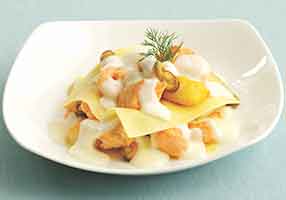
Lasagne pasta sheets
A favourite dish all over the world, lasagne is made by stacking thin sheets of pasta between alternate layers of filling and then baking. The traditional recipe uses ground meat, tomato, white sauce and cheese, but there are lots of mouthwatering versions meat-free options too. Lasagne sheets can also be used to make cannelloni (just roll them around the filling rather than layering them up) and stuffed pastas like ravioli.
We recommend using our Lasagne Roller KAX980ME attachment to help you create authentic sheets of fresh pasta with ease.
Penne
Originally from the Liguria region, penne is popular the world over. It’s a short tubular pasta that is cut diagonally at each end. The ridges on the outside help chunkier sauces cling to every piece, so it works well with a rich ragu or bolognese, or within a hearty pasta al forno.
How to make pasta shapes
Our Kenwood Pasta Shaper Attachment allows you to make your own homemade pasta in a range of different shapes, quickly and easily.
Fitting both the kMix and Kenwood Chef ranges, this attachment includes the Maccheroni rigati die which will allow you to make a range of pasta shapes. The die gives the pasta a really authentic roughly textured surface which is ideal for holding the pasta sauce and bringing maximum flavour to every mouthful.
Not only does using a machine make creating homemade pasta quicker and easier, but with 12 other dies also available there are just so many more different pasta shapes and recipes for you to try compared to when making it by hand; from noodles to tubes and twists, stuffed to baked, layered to rolled. Simply pop on the appropriate die, push your homemade pasta dough down into the machine and cut to the desired length. It really is as simple as that.
For more information on how easy it is to use the pasta shaper attachment, watch this short video:
How to make pasta shapes by hand
Of course, you can make pasta by hand too- indeed, traditionally pasta was just rolled out on a floured surface, and made with little to no equipment bar a rolling pin. The key thing to remember is that the pasta needs to be rolled out quite thinly in order to achieve the texture you’re looking for- and that can take some time, and a bit of effort!
Here are some tips for how to cut and shape three classic pasta shapes by hand:
Lasagne sheets Roll out your pasta dough to a thickness of about 2mm on a lightly floured surface. With lasagne it needs to be thin, but not so thin that it will break up when it comes to layering your dish. Cut your dough into around 4-6 equal rectangular sheets for each layer.
Noodles (such as linguine or pappardelle) Roll the pasta out into a thin sheet as before. Use a sharp knife to cut into long even strips- a ruler will help you keep them straight and even. For linguine aim for strips around 0.5cm wide. If you’re making pappardelle you’ll need to make bigger strips- about 2.5cm wide.
Farfalle This is a great one to get the kids involved in. Cut your rolled out pasta sheet into even rectangles measuring about 2.5cm x 4cm wide. Using your thumb and forefinger pinch the middle point of the long edges of each rectangle in towards the centre, creating a pleat. And there you have it, a little pasta bow-tie.
Do all pasta shapes taste the same?
Rather confusingly, yes and no. Cooked pasta made using the same ingredients will taste the same whether it’s spaghetti or orecchiette. However homemade fresh pasta absorbs sauce and flavour more than dried varieties, and how much this happens will depend on a pasta shape's size and surface area. Our high quality bronze dies give the pasta a roughly textured surface which ensures it absorbs even more flavour when served with a sauce.
Selecting the right pasta shape
If you ask an Italian cook this question they’d say that as a general rule you should team longer shapes such as spaghetti or linguine with smoother oil or cream based sauces, which will lightly coat their length. Chunkier, more robust sauces, such as a meaty ragu, are better suited to pasta shapes like penne, with hollow middles, grooves or curves that can capture the sauce.
Of course based on this, spaghetti bolognese-a classic dish that is served and loved the world over, is completely inauthentic. And it’s true that in Italy it’s unlikely that a bolognese sauce would ever be served with a pasta like spaghetti. So while thinking about which pasta shape will bring out the best in your chosen sauce can really enhance your dish, it just goes to show that there are no hard and fast rules in the kitchen. It’s a place to experiment and create, and above all, have fun. So why not try something different today? Unless of course, you’re having an Italian chef over for dinner…