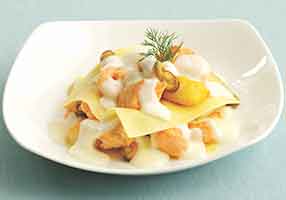
With dried store bought pasta so easy and cheap to buy, you’d be forgiven for wondering if it's worth the time and effort to make your own from scratch. Well, it really is. While dried pasta is ideal for a quick, fuss-free weekday meal, homemade pasta is not only delicious, it is surprisingly easy to make. Once you’ve learnt the basic skills it’s an incredibly satisfying process-and really fun, too.
How to make homemade pasta
Pasta comes in hundreds of different shapes and sizes, and can work with so many different sauces or fillings, from classic household favourites to richly complex flavour combinations.
Here’s our guide to some of our favourite pasta shapes, and how they can be used to really enhance a dish. We’ll show you just how simple it is to make a host of different pasta shapes in your own kitchen, and hopefully you will feel inspired to experiment with your own creations. Most of these shapes can be simply created at home using our pasta shaper attachment, which fits both our kMix and Kenwood Chef ranges.
Wat zijn de verschillende soorten pastavormen?
Er is een wereld van verschillende pastavormen buiten de gebruikelijke favorieten. Elk heeft een andere oorsprong en vorm en past op een andere manier bij de rest van een gerecht. Combineer de juiste pastavorm met je saus en het kan een geheel nieuwe dimensie aan je gerecht geven; zorgt voor contrast en textuur en verbetert de smaak van uw saus.
Macaroni (Maccheroni Lisci)
Macaroni zijn korte smalle buisjes pasta met een gat in het midden. Het wordt het meest gebruikt in de klassieke familie-publiekstrekker, macaroni-kaas, maar het is een ideale pasta om te gebruiken in elke heerlijk geruststellende pastaschotel. Vanwege hun kleine formaat werkt macaroni ook goed in soepen, bouillons of stoofschotels.
Bigoli
Bigoli ziet eruit als een dikkere versie van spaghetti, maar heeft een ruw gestructureerde buitenkant waar sauzen prachtig aan hechten. Het is afkomstig uit de regio Veneto en wordt traditioneel gegeten met een ragu van eend, wild of worst.
Casarecce
Casarecce zijn korte, enigszins gedraaide pastabuizen waarvan de lange randen naar binnen krullen, waardoor er een groef ontstaat die door het midden loopt. Oorspronkelijk afkomstig uit Sicilië, zou casarecce traditioneel worden geserveerd met dikke, stevige sauzen die barsten van de smaken van Zuid-Italië; denk aan aubergines, zoete tomaten en basilicum.
Spaccatelli
Spaccatelli zijn pastarolletjes die in het midden zijn gespleten zodat ze op een opgerolde boekrol lijken. Net als bij bucatini (link), betekent dit dat de saus en eventuele stukjes zich in de tubes kunnen verzamelen en de buitenkant kunnen bedekken voor een echte smaaksensatie.
Spaghetti
Waarschijnlijk de bekendste pastavorm ter wereld, spaghetti zijn lange slierten pasta ('spago' betekent sliert in het Italiaans). Het gladde oppervlak van spaghetti maakt het een echte veelzijdige pasta die goed werkt met zoveel verschillende soorten sauzen, vooral de lichtere, van lossere tomatensausen tot zeevruchtenfavorieten met olijfolie zoals vongole of garnalenspaghetti. We denken ook dat het zorgt voor een onverslaanbare spaghetti alla carbonara.
Pappardelle
Afkomstig uit de Italiaanse regio Toscane, zijn pappardelle brede, platte linten pasta die traditioneel worden gecombineerd met een rijke vlezige of wildsaus, zoals een flinke runder- of varkensragu.
Silatelli
A long noodle shaped pasta from Naples that is similar to tagliatelle but shorter and slightly wider, and often pinched in the middle. Try serving with clams or mussels.
Linguine
Like spaghetti, linguine is a long, noodle-like pasta, but it has a flatter surface. Pasta shapes like this tend to work better with lighter tomato or olive oil based sauces, or with seafood. Try serving with crab meat, chilli, garlic, lemon, parsley and a good glug or two or olive oil for a quick and simple crab linguine- it never fails to impress.
Fusilli
Traditionally made by curling spaghetti around a thin rod, this curly, corkscrew shaped pasta works well with oil-based herby sauces like pesto, which can get stuck between the curves. It's also great in a pasta bake.
Conchigliette
The word ‘conchiglia’ is Italian for sea shell, which explains this pasta’s name, shaped as they are like little conch shells. Conchigliette are the smaller version of conchiglie which are often used in baked pasta dishes, but because of their size conchigliette are most commonly used to add texture to pasta salads or soups.
Bucatini
Bucatini is a long cylindrical shaped pasta that’s thicker than spaghetti and hollow in the centre, rather like a straw. So not only do the noodles get coated in a sauce, they can get filled with it too! Pair it with sauces that can really seep in to the hollows of the tubes, like a rich and spicy amatriciana sauce.
Orecchiette
Orecchiette är typiskt för regionen Puglia i södra Italien och kallas traditionellt för "små öron". Deras lilla, skålliknande form hjälper dem verkligen att hålla en sås och säkerställa att varje tugga levererar smak. Skapa den klassiska syditalienska rätten cimi di rapa med broccoli, vitlök, ansjovis och röd chili.
Farfalle (fjärilspastan)
Farfalle har sin karakteristiska fjärilsform från regionerna Emilia-Romagna och Lombardiet i norra Italien. Den serveras ofta med krämiga såser, eftersom vingarnas skrynkliga kanter är perfekta för att fånga upp såsen, men är också populär att använda till kalla pastasallader.
Lasagneplattor
Lasagne är en favoriträtt över hela världen och tillagas genom att man staplar tunna pastaskivor mellan olika lager av fyllning och sedan gräddar i ugnen. I det traditionella receptet används köttfärs, tomat, vit sås och ost, men det finns massor av läckra köttfria versioner. Lasagneplattor kan också användas till cannelloni (rulla dem bara runt fyllningen i stället för att lägga dem i lager) och fyllda pastaprodukter som ravioli.
We recommend using our Lasagne Roller KAX980ME attachment to help you create authentic sheets of fresh pasta with ease.
Penne
Originally from the Liguria region, penne is popular the world over. It’s a short tubular pasta that is cut diagonally at each end. The ridges on the outside help chunkier sauces cling to every piece, so it works well with a rich ragu or bolognese, or within a hearty pasta al forno.
How to make pasta shapes
Our Kenwood Pasta Shaper Attachment allows you to make your own homemade pasta in a range of different shapes, quickly and easily.
Fitting both the kMix and Kenwood Chef ranges, this attachment includes the Maccheroni rigati die which will allow you to make a range of pasta shapes. The die gives the pasta a really authentic roughly textured surface which is ideal for holding the pasta sauce and bringing maximum flavour to every mouthful.
Not only does using a machine make creating homemade pasta quicker and easier, but with 12 other dies also available there are just so many more different pasta shapes and recipes for you to try compared to when making it by hand; from noodles to tubes and twists, stuffed to baked, layered to rolled. Simply pop on the appropriate die, push your homemade pasta dough down into the machine and cut to the desired length. It really is as simple as that.
For more information on how easy it is to use the pasta shaper attachment, watch this short video:
How to make pasta shapes by hand
Of course, you can make pasta by hand too- indeed, traditionally pasta was just rolled out on a floured surface, and made with little to no equipment bar a rolling pin. The key thing to remember is that the pasta needs to be rolled out quite thinly in order to achieve the texture you’re looking for- and that can take some time, and a bit of effort!
Here are some tips for how to cut and shape three classic pasta shapes by hand:
Lasagne sheets Roll out your pasta dough to a thickness of about 2mm on a lightly floured surface. With lasagne it needs to be thin, but not so thin that it will break up when it comes to layering your dish. Cut your dough into around 4-6 equal rectangular sheets for each layer.
Noodles (such as linguine or pappardelle) Roll the pasta out into a thin sheet as before. Use a sharp knife to cut into long even strips- a ruler will help you keep them straight and even. For linguine aim for strips around 0.5cm wide. If you’re making pappardelle you’ll need to make bigger strips- about 2.5cm wide.
Farfalle This is a great one to get the kids involved in. Cut your rolled out pasta sheet into even rectangles measuring about 2.5cm x 4cm wide. Using your thumb and forefinger pinch the middle point of the long edges of each rectangle in towards the centre, creating a pleat. And there you have it, a little pasta bow-tie.
Do all pasta shapes taste the same?
Rather confusingly, yes and no. Cooked pasta made using the same ingredients will taste the same whether it’s spaghetti or orecchiette. However homemade fresh pasta absorbs sauce and flavour more than dried varieties, and how much this happens will depend on a pasta shape's size and surface area. Our high quality bronze dies give the pasta a roughly textured surface which ensures it absorbs even more flavour when served with a sauce.
Selecting the right pasta shape
If you ask an Italian cook this question they’d say that as a general rule you should team longer shapes such as spaghetti or linguine with smoother oil or cream based sauces, which will lightly coat their length. Chunkier, more robust sauces, such as a meaty ragu, are better suited to pasta shapes like penne, with hollow middles, grooves or curves that can capture the sauce.
Of course based on this, spaghetti bolognese-a classic dish that is served and loved the world over, is completely inauthentic. And it’s true that in Italy it’s unlikely that a bolognese sauce would ever be served with a pasta like spaghetti. So while thinking about which pasta shape will bring out the best in your chosen sauce can really enhance your dish, it just goes to show that there are no hard and fast rules in the kitchen. It’s a place to experiment and create, and above all, have fun. So why not try something different today? Unless of course, you’re having an Italian chef over for dinner…