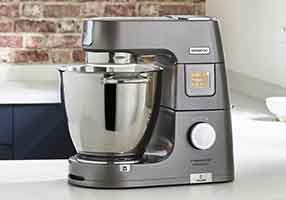
Boosta ditt självförtroende när du ska baka bröd hemma med din köksmaskin. Från surdegsstartare till att förstå jäst - vi har koll på allt! En nybörjarguide till allt som har med bröd att göra. Det finns inget bättre än nybakat bröd, och det är ännu godare när man har bakat det själv. När du väl har lärt dig grunderna finns det så många olika typer av bröd att prova, från snabba och enkla sodabröd till rika och njutbara briocher, och allt däremellan. Dessutom är det väldigt avslappnande men också roligt att baka bröd - det är det perfekta sättet att ta en paus från den stressiga vardagen.
I den här guiden får du lära dig allt du behöver veta för att baka den perfekta limpan, från olika tekniker för hur man bakar bröd till hur och när du ska använda olika mjölsorter eller ingredienser. Vi tar dig steg för steg genom ett av våra klassiska bröd recept och visar dig hur du använder en av våra köksmaskiner med degkrokstillsats för att göra brödbaket snabbare och enklare. Vi har också samlat några av de vanligaste frågorna om brödbakning för att hjälpa dig på vägen.
Välkommen till brödbakandets underbara värld - varning: det är ganska beroendeframkallande.
How to make bread
If you’re new to making bread, it’s best to start with a simple recipe like this one for Sourdough. A fail-safe crowd pleaser, this bread is ideal for sandwiches, toast or for dunking in soup. With only a few ingredients it’s cost effective and a delicious, popular recipe to make time and time again
Ingredients
For the bread
350ml water
550g strong white flour, plus a little extra for dusting
1 tsp salt
300g starter (see our recipe below)
For the starter
250g strong white bread flour
250g dark rye flour
Step one – Mixing the bread dough
To make the sourdough loaves add the water, 500g strong white bread flour and salt to the bowl. Pour in 300g of the starter, attach the dough hook and knead well on speed 1 for 10/15 minutes, until you have a strong, smooth and elastic dough. Kneading is the process which develops the gluten in the dough, either by working it with your hands or in a mixer. It’s crucial to successful bread-making because it’s the gluten that gives the dough its elasticity and stretch.
Step two – Kneading the dough
Having kneaded your ingredients using your stand mixer Remove the bowl and cover with a damp cloth and leave to rise for 3 to 4 hours
Kneading your dough by hand can be a wonderfully therapeutic and satisfying process. But it also takes a bit of effort, and it can’t be rushed! Using a mixer does the hard work for you, and makes it a lot quicker too. And you will still have plenty of opportunities to experience the tactile joys of working with the dough when you’re proving and shaping it.
Steg tre – jäsa deg
När degen har blandats och knådats måste den stå och jäsa. Under jäsningen livnär sig jästen på näringsämnena i mjölet och producerar bubblor av koldioxid. Detta är viktigt eftersom degen då blir mycket lättare att hantera och forma.
Mjöla din arbetsyta och ta upp degen ur bunken. Dela degen i två delar, slå ut luften och forma till bullar. Olja två skålar lätt och lägg degen i skålarna, täck med en kökshandduk och låt jäsa i tre timmar i ett rum där det inte drar samt att rummet är varmt, i en timme. Den ultimara temperaturen för jäsning av bröd är ca 21 °C - om det är för kallt tar det längre tid för degen att jäsa. Om du har en av våra senare köksmaskins modeller kan du använda inställningen för degjäsning, som gör att du kan ställa in den perfekta temperaturen och omrörningshastigheten.
Hur länge ditt bröd behöver jäsa varierar från recept till recept - vissa snabba bröd behöver bara jäsa i 30 minuter, medan det rekommenderas att mer rikliga degar som briocher får jäsa över natten så att smaken förstärks. Men som en allmän riktlinje så kan man utgå från att degen ska jäsa tills den åtminstone fördubblats i storlek. Dra ett streck på sidan av skålen eller ta en bild på degen med din telefon för att få en uppfattning om hur lång tid det tar.
Step four – Preparing to bake your bread
Heat the oven to 250°C and line a baking tray with baking paper.
Remove the dough from the bowls and place onto a baking tray, give a good dusting of flour and score a cross in the top of each loaf.
Boil the kettle, pour some of the water into a shallow baking tray and place in the bottom of the oven (this creates steam to help make a crust).
Bake the loaves in the oven for 35 minutes or until the bottom sounds hollow when tapped.
Leave to cool on a wire rack for about an hour
Sourdough starters
Sourdoughs are created using a ‘starter’ and help to develop the flavour of the bread. You can keep your starter for as long as you wish to continue baking bread, as long as you keep feeding it and keep it nourished.
Mix together 100ml warm water with 50g of each of the flours. Cover the container with a wet tea towel and leave in a warm corner of your kitchen for 48 hours.
After 48 hours, the starter should be beginning to grow some small bubbles and will smell slightly beery. If nothing has happened yet, cover the container and leave for another 24 hours.
Discard half of the starter, and mix in another 100ml warm water, 50g each of white bread flour and dark rye. Cover with a wet tea towel again and replace in the warm corner for another 24 hours.
Repeat the discarding and again add 100ml warm water and 50g of each of the flours, cover with the tea towel and leave to ferment for another 24 hours. The starter should be more and more bubbly each day and the smell will become more sour and tangy.
Repeat the process for two more days. By this time your starter should be good and ready to make bread!
You can keep your starter indefinitely; if you keep it out, it will need feeding with flour and water every day, or you can keep it in the fridge and feed it once a week
Exploring the different types of bread
Once you’ve mastered a simple bread recipe and familiarised yourself with some of the universal techniques and skills, your journey of exploration into the world of breads can really begin.
Bread can be baked using different types of flour and with a huge range of ingredients that can completely change its flavour, texture or colour. It can be made using yeast or without, be sweet or savoury. There are so many different types of bread from all over the world for you to try your hand at. Once you’ve fallen in love with baking bread, there’s really no going back.
Making bread without yeast
There are plenty of breads you can make without using yeast, such as soda breads, naan breads or tortilla wraps. Not using yeast in a recipe usually makes for a quicker bake, as you don’t have the same long proving times. That’s why yeast-free breads are often known as quick breads.
Yeast-free bread recipes will often include another raising agent, such as baking powder or baking soda, or use eggs or butter to help give the bread some lift.
Using enriched doughs
Unlike your standard dough which typically contains just four ingredients (water, flour, yeast and salt), enriched doughs contain at least one extra ingredient, usually eggs, milk, sugar or butter. These are there to add either fat, colour or flavour to the bread. Baking with enriched doughs creates a wide variety of sweet and savoury breads, such as brioche, cornbread and challah.
When it comes to using enriched doughs, there are a few things to consider to ensure you get the perfect bake:
Many enriching ingredients weaken the dough’s gluten structure, so enriched doughs often need more kneading time. Using a stand mixer with a dough hook for this stage will really speed things up, and give your arms a welcome break!
Expect a longer proving stage as enriched doughs usually have a slower fermentation time.
Enriched doughs tend to be wetter, and therefore a bit messier to work with. Chilling your bowl will help keep the dough solid and easier to handle and shape.
Discover a world of different breads in your own kitchen. Here's a selection of our favourites to get you started:
Baguette: A long, thin French bread that’s light and airy with a crisp, golden crunch
Breadstick: Made using strong white flour to create a pizza like dough, breadsticks are crisp and dry all the way through and can be flavoured with various seeds, herb or seasonings
Brioche: Enriched with butter and eggs, brioche is a soft, rich bread that can be sweet or savoury
Challah: Baked using an enriched yeast dough, this buttery braided loaf is traditionally eaten during Jewish celebrations
Ciabatta: A chewy Italian white bread with a crisp crust and soft and airy crumb
Cornbread: Made without yeast, this firm yellow bread is an all-American favourite that makes a great accompaniment to chilli or soup
Focaccia: An oil-rich Italian sharing bread baked in flat sheet pans and sometimes topped with herbs or vegetables
Multigrain: Packed with seeds and grains for a nutty tasting and full-flavoured textured loaf
Pitta: A puffy pocket flatbread, delicious served with hummus or other dips
Sourdough: With a distinctive tangy flavour and airy texture, this slow fermented bread is made using a live sourdough starter
Rye: A dark, dense bread with an earthy, nutty flavour, traditional in many Eastern European countries
Soda: Soft and dense in the middle and crusty on the outside, this quick bread is made without using yeast
Wholemeal: Also known at wholewheat bread, this is baked using wholemeal flour which retains all the best bits of the wheat grain, and so has a higher fibre content than white bread
Hur vet man att brödet är klart
Bagare förlitar sig ofta på tre enkla kontroller för att avgöra om deras bröd är färdiga:
Titta: Färgen på din limpa bör ge dig en bra indikation på hur nära den är att vara färdiggräddad. Det varierar naturligtvis från recept till recept, men för de flesta bröd vill man ha en jämnt gyllenbrun skorpa som är fast att ta på och torr. Om den fortfarande är mycket blek behöver den några minuter till.
Lyssna: Knacka ordentligt med fingertopparna på brödets botten. Om det låter ihåligt är det dags att ta ut brödet ur ugnen. Om ljudet fortfarande är dämpat ställer du in brödet i några minuter till och kontrollerar igen. Ju mer du bakar desto lättare blir det för dig att känna igen det ljud du lyssnar efter.
Temperatur: Du kan också använda en snabbläst termometer för att kontrollera brödets innertemperatur. De flesta bröd är färdigbakade vid ca 190-200°C.
Vad händer om mitt bröd inte jäser?
Efter att ha lagt ner all tid och kärlek på att baka hembakat bröd kan det vara väldigt trist när degen inte klarar utmaningen. Det finns kopplingar till naturvetenskapen bakom konsten att baka bröd, och om något element inte är helt rätt kan det leda till mindre perfekta resultat. Men få inte panik om ditt bröd inte har jäst ordentligt den här gången - här är vad som kan ha gått fel (och kom ihåg, övning ger färdighet!):
Kontrollera datumet på din jäst för att se om det har gått ut. Jäst är en aktiv organism med oändlig hållbarhet. Efter utgångsdatumet kan den inte längre göra jobbet lika effektivt - eller överhuvudtaget. Om du använder torkad eller färsk aktiv jäst bör du därför alltid prova den innan du börjar göra degen.
Vattnet du använder för att jäsa jästen får inte vara för kallt. Jäst behöver fukt och värme för att kunna arbeta och därför måste vattnet vara varmt - i princip samma temperatur som blodet. Ett enkelt sätt att kontrollera är att sticka fingret i vattnet - om du inte märker någon temperaturförändring bör det vara ungefär rätt.
Vad händer om mitt bröd är överjäst?
Överjäst bröd blir täta och tomma på luft. Detta beror på att glutenet i degen har sträckts ut för mycket, vilket gör att degen i princip kollapsar.
Jästiden varierar beroende på recept. Du kan kontrollera degen genom att peta på den med fingret; om den sjunker tillbaka väldigt snabbt betyder det att det finns för mycket luft i den och att den är överjäst. Tryck i så fall ut luften, forma om och jäs igen.
Hur man förvarar hembakat bröd
Hembakat bröd är bäst att äta inom 24 timmar efter bakning, men håller 3-4 dagar om det förvaras i en brödkorg eller annan behållare, t.ex. i en återanvändbar linnepåse. Om du värmer bröd som är några dagar gammalt i en varm ugn i några minuter får det en snabb uppfräschning, och det blir fortfarande bra rostat bröd. För att undvika att nybakat bröd blir fuktigt och mögligt är det viktigt att du inte förvarar det förrän det är helt nedkylt.
Om du inte hinner baka hela limpan i tid kan du frysa in den. När brödet har svalnat skär du upp det i portionsbitar och dubbelförpackar sedan varje bit med plastfolie och aluminiumfolie för att hålla luften borta. På så sätt behöver du bara tina upp det du behöver nästa gång du är sugen, i stället för hela limpan.
Se till att du märker brödet med datum och vilken typ av limpa det är innan du fryser det. Fryst bröd bör användas inom sex månader.
Why is my bread dry?
This can happen when you add too much flour to your dough and not enough water. This sometimes happens during the kneading process when people are worried their dough is too sticky and so they add more flour. Or if they haven't kneaded it enough.
Why is my bread so dense?
A dense heavy loaf may be the result of not kneading the dough for long enough, as the gluten hasn’t had the chance to properly develop. After kneading your dough should feel flexible and stretchy. Bakers often use what is known as ‘the windowpane test’ to check how well the gluten structure has developed. Take a small piece of dough and hold it up in front of the light. Using the thumb and first two fingers of each hand gently stretch the sides away from each other. A well-developed dough structure will stretch thin without tearing and allow the light to shine through it. If the dough tears the gluten isn’t fully developed yet and needs further kneading.
Remember that some heavier flours such as whole wheat or rye will produce a heavier loaf. If you want to keep that airier texture but still want those more complex flavours try mixing these flours with a white bread flour.
What flour should I use?
When you're baking bread you need to use a strong flour with a higher protein level than the flour you’d use when making cakes or biscuits. This is because the higher the protein, the more gluten there is, and it’s the gluten that acts as the ‘glue' to help bind the dough and give it structure.
If you’re new to baking bread we recommend you start by using a strong white bread flour. Once you’re feeling more confident you can move on to experimenting with different types of flours, such as wholemeal, rye or spelt, which can really change a bread’s flavour, colour and texture. Each will need to be worked differently, and you may need to adjust your recipes to accommodate more kneading or proving time, depending on what flour you're using.
Types of yeast
There are three main types of commercially used yeast- active dry, fresh and fast action. All of them act as a leavening agent, causing the dough to rise, but have different properties.
Active dry yeast Most commonly in granule or powder form, active dry yeast is popular with home bakers because it’s easy to get hold of and convenient to use. Before it’s added to the other ingredients, it needs to be proved. Essentially this is to check the yeast is still active and able to produce the bubbles in the dough that make it expand. To prove dry yeast you just combine it in a bowl with lukewarm water and allow the mixture to stand for 5-10 minutes until a bubbly foam starts to form on the surface. You can then add it to the rest of your ingredients
Dry yeast should be stored in a cool dry place and can be used up until the recommended use by date (but not after, or you’ll risk a sunken loaf!)
Fresh yeast Coming in a solid form (often as a bar or cake), fresh yeast also has to be proved or activated by adding it to warm water. Once you’re proved fresh yeast you crumble it into the dry ingredients.
Fresh yeast used to be a lot harder to come by- and expensive, which is why it was mainly used by the professionals. These days you can often find it in delis or the chilled aisles of some supermarkets. It needs to be stored in the fridge and has a much shorter shelf life than dry yeast, up to about three weeks. For the best results it should be used at its freshest.
Fast action yeast Sometimes referred to as instant or quick-rise yeast, the major difference between fast action yeast and active dry or fresh is that it doesn’t need to be activated in water before it’s combined with other ingredients. This makes it a quick and convenient choice for regular bakers, and it can easily be substituted for dry yeast in most recipes.
As with dry active yeast, fast action yeast should be stored in a cool dry place and used before the expiration date.
Ready to make your own homemade bread? Get started with Kenwood.
Bread making is such a joyful and satisfying activity, and our range of stand mixers are designed to help you enjoy the process of transforming simple ingredients into something truly delicious.
For some inspiration for your next bake why not check out our bread recipes?